Diploma Seals — Raised Embossing, Shiny Gold, and Every Finish In Between
There’s a moment that happens when someone picks up one of our premium diplomas for the first time. They look at it, they think it looks good, and then their finger finds the seal — and they stop. They run their fingertip across it again. They look up. Every single time, the reaction is the same.
That moment is what this page is about.

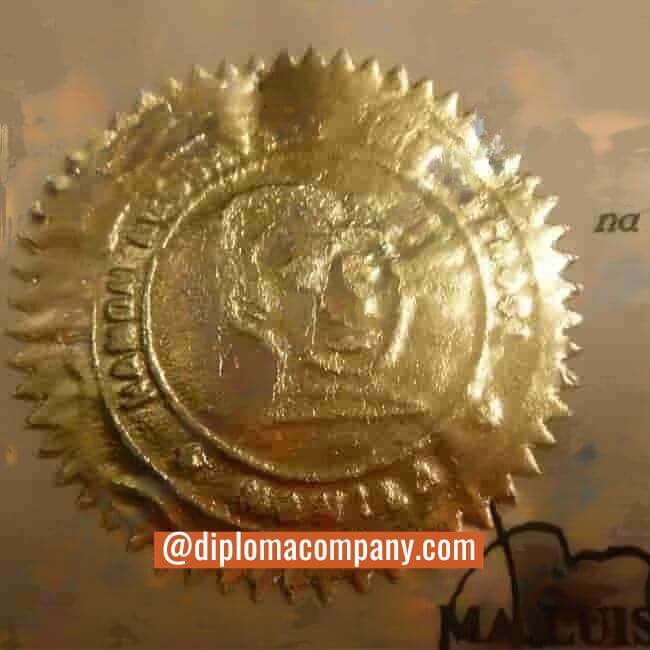
- Just wait until you see this in person! It’s a work of art!
- Take note of the school name elegantly raised in gold above the green ring!
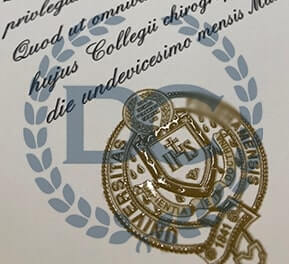
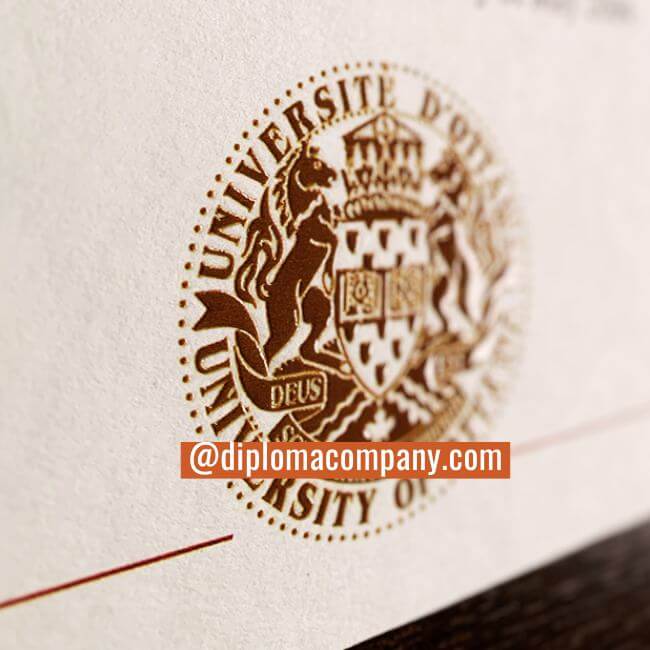
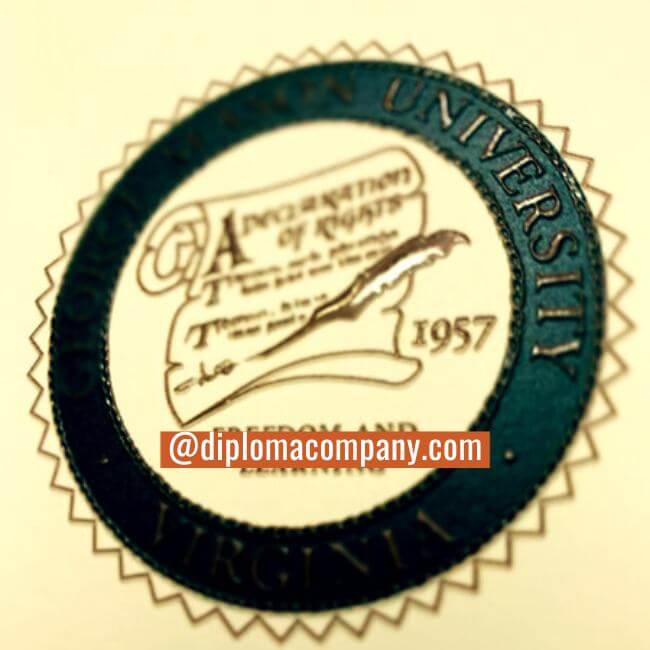

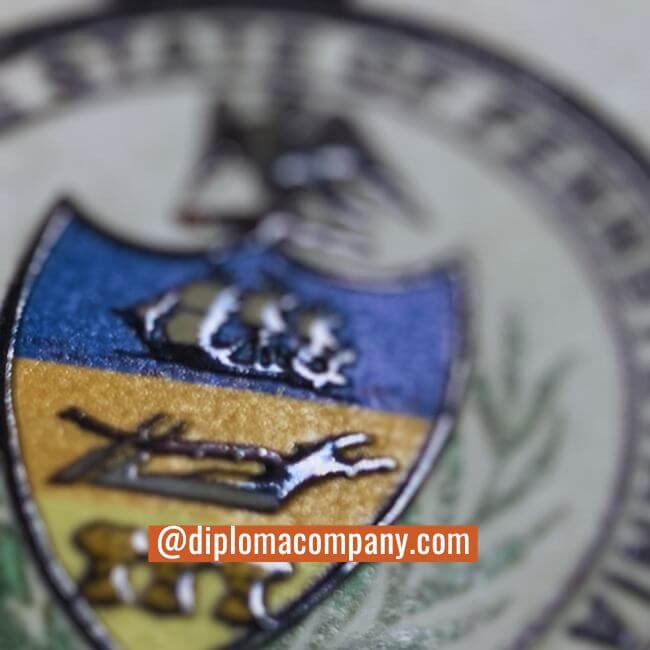
Also available on certificates and college degrees.
We’ve been producing replica diplomas since 2007 and in that time we’ve invested heavily in the equipment and techniques required to produce raised seals, shiny gold metallic finishes, and embossed lettering that don’t just look authentic — they feel authentic in a way that flat printing simply cannot replicate. Nobody else in this space does this at the level we do it. We’re not being modest about that. It’s just true.
Why the Seal Is the Most Important Detail on Any Diploma
A diploma is a printed document. Print it well and it looks right. But a seal — a real institutional seal — has physical dimension. It has depth. It has texture you can feel with your eyes closed. When someone hands you a diploma and you reach for the seal instinctively, that’s not a conscious decision. That’s your brain doing an authenticity check that happens before you’ve even thought about it.
Flat printing passes the visual check. Raised embossing passes every check.
That’s the difference between a diploma that looks good hanging on a wall and a diploma that makes someone pick it up, turn it over, and ask if it’s real.
Every school has its own seal tradition — unique shapes, fonts, crest details, colors, and embossing patterns, many of which date back decades. Some used raised multi-layer embossing. Some used shiny gold metallic foil. Some used flat printed designs. We’ve documented seal types from over 10,000 diploma layouts spanning decades, and we built our print shop capabilities to produce all of it accurately.
Our Seal and Embossing Options
Every diploma order includes a standard flat printed seal at no additional charge — and for a document going behind glass or being scanned, flat is completely fine and looks fantastic. But if you want the full experience, here’s exactly what we offer:
Flat Seal & Text — Included, No Extra Charge
High-resolution color printing with exact color matching. Clean, sharp, and professional. Used by many modern schools — particularly high schools and GED programs from the 2000s onward — and the right choice for anyone framing behind glass, scanning their document, or working with a tight deadline. This is our most popular option and there is absolutely nothing wrong with it. It just doesn’t have the texture.
Best for: Framing behind glass, scanning, props, fastest turnaround Cost: Included with every order
Raised Custom Seal — +$90
This is where it starts. A single raised embossed seal pressed directly into your diploma — the school crest, the institutional emblem, the circular stamp that makes a diploma look and feel like a diploma. Run your finger across it and feel the edges, the depth, the dimension.
We produce this using multi-layer pressing that builds real physical depth into the paper — not a sticker, not a foil overlay, not an embossing powder finish. Actual pressed embossing built into the document itself. The difference in person is immediately obvious.
Best for: Display where people can touch it, historically accurate for most 1970s–1990s diplomas, anyone who wants tactile authenticity without raised text Cost: +$90.00
Raised Text — +$125
This one surprises people. Most buyers think about the seal when they think about raised elements — but a significant number of real institutional diplomas had raised lettering too. Your name. The degree. The institution. Run your finger along the text and feel each letter sitting above the surface of the paper.
We were the first in this industry to offer raised text through layered printing technology. Before our investment in this capability the only way to get raised lettering was through embossing powders and heat guns — a manual process that produced uneven, single-color results that looked noticeably inferior up close. Our method produces sharp, multi-color, high-resolution raised lettering that holds up under serious scrutiny.
Best for: Maximum realism when the text on your original diploma was raised, close-up display, anyone who wants to feel every detail Cost: +$125.00
Raised Text & Raised Custom Seal — +$180
This is the one. Both the seal and every line of text raised off the surface of the diploma simultaneously. Pick it up and run your finger across the whole thing — the institution name, your name, the degree, the date, the seal — all of it has dimension, all of it has texture, all of it feels exactly the way a premium institutional diploma feels when you hold the real thing.
We’ve had customers tell us they would pay a thousand dollars for a diploma that felt like this. It’s $180 over the base price. That gap between what people feel it’s worth and what we actually charge for it tells you something about how seriously we take this part of what we do.
Some buyers choose this option because their original diploma had both raised text and a raised seal and they want the replica to match exactly. Others look at the price, think about what they’re getting, and just say yes — because when you’re ordering something you want to be proud of, $180 for the full treatment isn’t a hard decision.
Best for: The complete experience, maximum tactile and visual authenticity, display where every detail will be noticed and touched, buyers who want the absolute best version of their document Cost: +$180.00
Shiny Gold & Metallic Foil Finishes
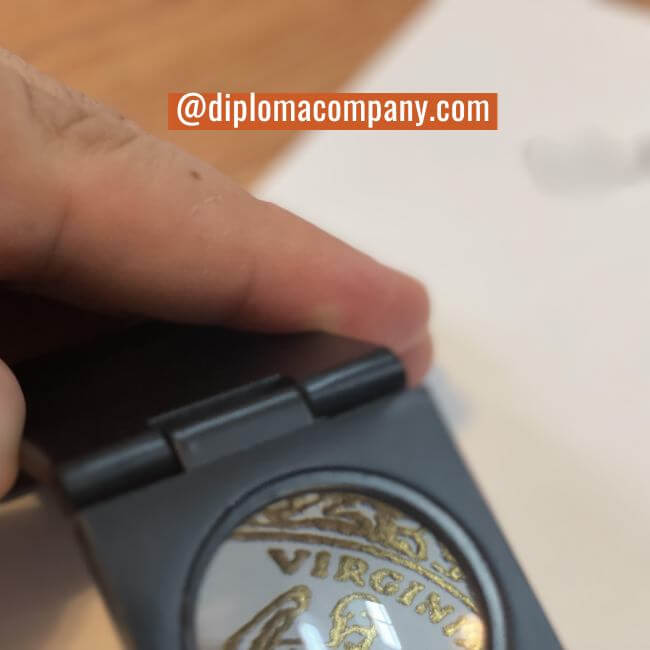
Not every great seal is a raised one. Many of the most prestigious institutional diplomas — particularly from colleges and universities — used shiny metallic gold or silver foil seals that catch the light beautifully without raised embossing. This finish is achieved through hot foil stamping, where heat and pressure transfer metallic foil permanently onto the paper producing a smooth, reflective shine that printed gold simply cannot replicate.
Gold foil seals are the standard on a huge percentage of real university diplomas particularly from the 1990s through today, and matching that finish accurately matters. We use proper hot stamping equipment rather than metallic powders — powders leave debris around the edges and produce an uneven finish that looks noticeably off under close inspection. Our foil seals are clean, sharp, and genuinely shiny in a way that photographs beautifully and looks right under any lighting condition.
If your original diploma had a flat gold foil seal rather than a raised embossed one, we match that — and the result is just as impressive in its own way. A well-executed gold foil seal on the right paper stock is a genuinely beautiful thing.
Raised Seals Take Time — Here’s Why That’s Worth It
We’re not going to pretend the premium options are instant. A raised custom seal takes 20 to 40 minutes per diploma to produce properly. The full raised text and seal treatment takes 30 to 50 minutes. That’s real production time from skilled hands operating specialized equipment — and it’s why we don’t automatically apply raised embossing to every order by default.
When you choose a raised option you’re choosing something that takes genuine craftsmanship to produce. The extra day or so it may add to your production time is the time it takes to do it right. Every buyer who has held the finished result has told us it was worth the wait.
Raised Text — The Feature Nobody Else Talks About
Most people in this space talk about seals. Seals get the attention, seals get the photos, seals are what buyers ask about first. But the buyers who have held a diploma with both raised text and a raised seal will tell you that the text is what takes it from impressive to extraordinary.
Feeling your own name raised off the surface of a diploma — each letter pressed into the paper with depth and dimension — is a completely different experience from seeing it printed flat. It’s the difference between a document that was produced and a document that was crafted.
We built the capability to do this properly because we felt the industry was leaving the best part of the experience on the table. We still feel that way. If you want to know what a truly premium replica diploma feels like, order the full treatment and find out for yourself.
Seal Placement by Education Level
Seal placement varies by institution, era, and document type. Our design team references authentic archived templates for every order to ensure correct positioning — but here’s a general guide to what you’ll typically see:
High School Diplomas Position: Bottom-left or center-bottom Size: 1.5″ to 2″ diameter Common finish: Gold foil, flat printed, or light embossing depending on era and state
College and University Diplomas Position: Bottom-center or alongside signatures Size: 2″ to 2.5″ diameter Common finish: Raised multi-layer embossing, gold foil stamping, or combination techniques — universities tend to use the most complex seal designs
GED Documents Position: Bottom-left or near state information Size: Approximately 1.5″ diameter Common finish: State seal in full-color printed or gold emboss depending on issuing state and year
Our design team automatically selects correct placement based on our template archive. If you have questions about your specific school or document, reach out before ordering and we’ll pull up what we know.
How We Do It vs. How Other Shops Do It
This is worth saying directly because it explains why our seals look and feel different from what you’ll get elsewhere.
Most shops in this space cut corners on seals. The most common shortcut is embossing powder applied with a heat gun — a manual process that produces clumpy, uneven, single-color results with debris around the edges that looks noticeably off under close inspection. Others use peel-and-stick foil stickers that sit on top of the paper rather than becoming part of it — these peel, fade, and flake over time and feel nothing like a real institutional seal.
We don’t do either of those things. Our raised seals are pressed directly into the paper using specialized equipment that builds real physical depth into the document itself. Our foil seals use proper hot stamping machines that transfer metallic foil permanently and cleanly. Our raised text uses layered printing technology we introduced to this industry in 2020 — before that investment nobody in this space was producing raised lettering at a quality level worth offering.
The difference isn’t subtle. Hold one of ours and then hold something produced with embossing powder and a heat gun and you will know immediately which one we made.
How Do I Know Which Seal Option My School Used?
This is the question we get most often and it’s a genuinely good one — because matching the original seal type is the most historically accurate approach, and we have the archive to help you figure it out.
We’ve documented seal types from over 10,000 diploma layouts spanning decades of production. Schools changed their seal methods over the years, different graduation levels used different techniques, and what was standard in 1985 was often completely different from what the same school used in 2005.
When you place your order our designers pull the archived layout for your specific school and graduation year. If the original used a raised seal we’ll tell you. If it used flat gold foil we’ll tell you that too. We match historical accuracy — which means recommending the right seal type for your diploma, not automatically upselling the most expensive option.
If you want to talk it through before ordering, call us or start a live chat. We’ll pull up what we know about your school and give you an honest recommendation in five minutes.
Frequently Asked Questions About Diploma Seals
What is a diploma seal?
A diploma seal is the official emblem or insignia applied to an academic document representing the issuing institution. It typically features the school’s crest, founding year, motto, and symbolic elements that reflect the institution’s heritage and academic tradition. On a physical diploma the seal is one of the most immediately recognizable elements — and one of the first things someone reaches for when inspecting a document.
What’s the difference between a raised seal and a flat foil seal?
A raised embossed seal is pressed directly into the paper creating physical three-dimensional depth you can feel with your finger. A flat foil seal uses metallic foil stamped onto the paper surface producing a shiny reflective finish without raised texture. Both are legitimate finishes used by real institutions — the right choice depends on what your original diploma used and how you plan to display it.
Can I add a raised seal to any diploma in your catalog?
Yes — raised seal and raised text upgrades are available on every diploma and degree we produce regardless of school, education level, or document type. Select your preferred upgrade from the dropdown on any diploma product page at checkout.
Will a raised seal show up in photos?
Absolutely — particularly well in angled lighting that catches the texture. Raised embossing produces dramatic shadow detail that makes the seal visually pop in photography in a way flat printing cannot replicate. Many customers specifically choose raised options for close-up photography purposes.
Is raised embossing the same technique real schools use?
The layered pressing technique we use to build physical depth into the paper is the same fundamental approach used by institutional diploma producers. We invested in proper equipment in 2020 specifically to move away from the embossing powder and heat gun method that was the industry standard before that — which produced inferior results compared to institutional embossing. Our current output is indistinguishable from institutional embossing to the touch.
What’s the difference between raised text and standard printed text?
Standard printed text sits flat on the paper surface — it looks correct but has no physical dimension. Raised text is produced through layered printing that builds each character above the paper surface creating lettering you can feel with your fingertip. On a diploma where the original institution used raised lettering — common through the 1980s and 1990s particularly — matching this detail is the difference between a good replica and an extraordinary one.
Can I get raised text without a raised seal?
Yes — raised text at +$125 and raised seal at +$90 are available independently. Some schools used raised text with flat seals. Some used raised seals with flat text. We match whatever combination was historically accurate for your document, or customize to your preference if historical accuracy isn’t the priority.
Does the raised seal affect framing?
Standard raised seals sit within the document without affecting standard diploma framing in most cases. The embossing adds physical dimension to the paper surface but doesn’t typically interfere with mat cuts or standard frame depths. If you have a specific framing situation you’re concerned about contact us before ordering and we’ll advise.
Do you ever use diploma seal stickers?
Never. Every seal we produce is permanently applied using professional equipment — pressed embossing, hot foil stamping, or layered printing. Peel-and-stick stickers peel, fade, and flake. They look wrong up close and feel nothing like a real institutional seal. We don’t use them and we never have.
How long does a raised seal take to produce?
A raised custom seal adds approximately 20 to 40 minutes of production time per diploma. The full raised text and raised seal combination adds 30 to 50 minutes. This is real skilled production time — not a delay, just craftsmanship. Most raised seal orders still ship within 24 to 48 business hours of proof approval.
What if I’m not sure which seal finish my school used?
Contact us before ordering. Give us your school name, state, and approximate graduation year and we’ll pull up what we have in our archive. We’ve documented over 10,000 diploma layouts and in most cases we can tell you exactly what seal type your school used and recommend the right upgrade to match it.
Want to see what we’re talking about in person? Order with the full raised text and seal treatment and find out why buyers tell us they’d pay ten times the upgrade price for what they receive.
Every diploma ships within 24 business hours of proof approval. Free U.S. ground shipping on every order. Backed by our 90-day satisfaction guarantee.